Dear Britain,
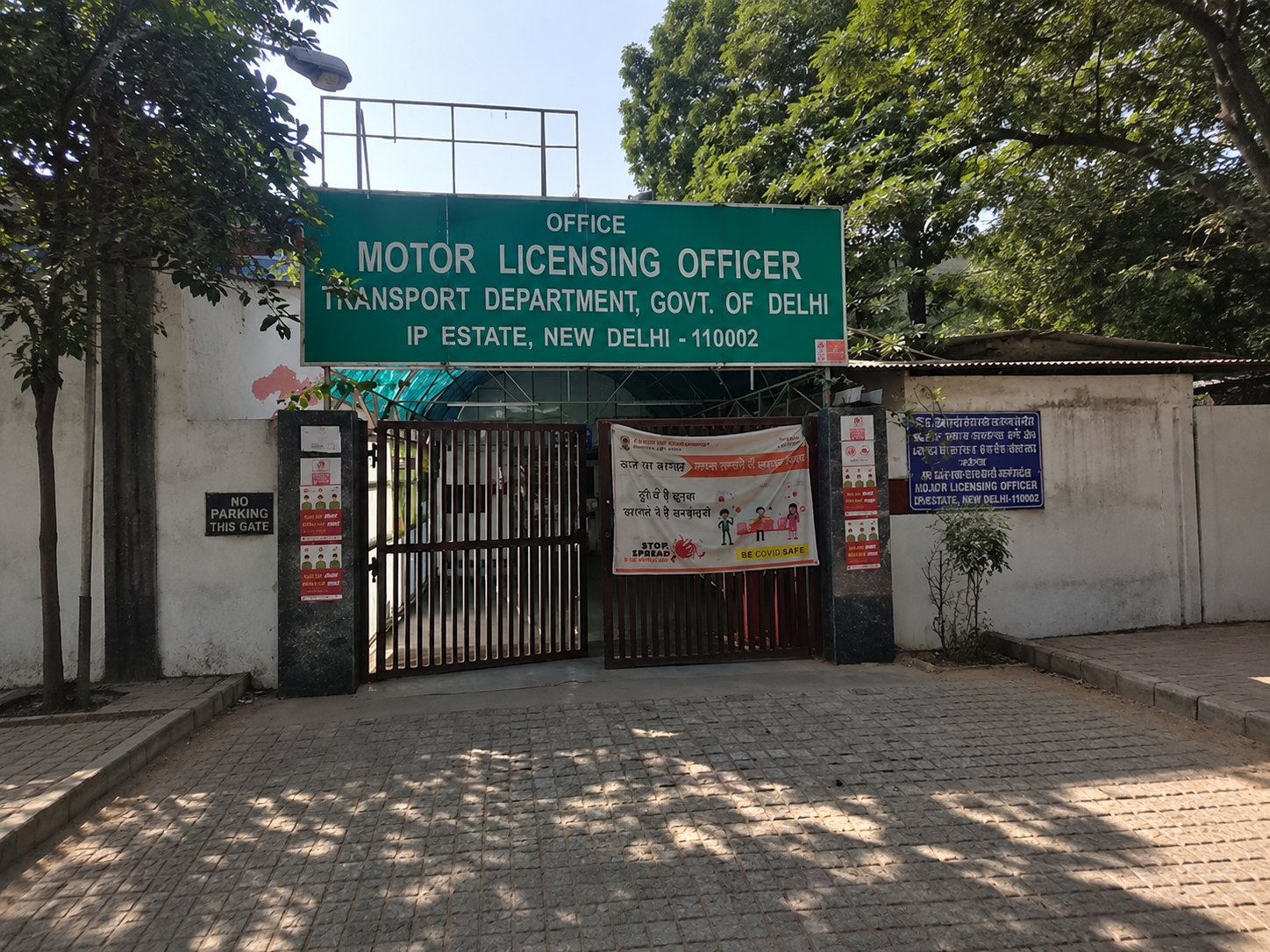
24 years ago, my 18-year-old self strode purposefully into a government office building in South Delhi. In trying to match the long, confident strides of the man I accompanied, I over-extended each step beyond its reach, which had the unintended effect of slowing me down, which in turn had the slightly comical effect of having me scurry rapidly and ungracefully every fourth step in an attempt to catch up. Dressed in a two-piece suit and tie, briefcase in one hand, features relaxed yet set, the man next to me commanded attention. Walking beside him, I felt like I was part of his aura. Like I exuded power just like him. This man was my father and we were in the Regional Transport Office (RTO) in Delhi close to where we lived back then.
I remember being ushered through busy corridors, chock full of men, into a quiet office. A large, white ceiling fan hung low over our heads. A man pulled two chairs for us to sit on. “Sir, Madam, please sit.” I glowed inside. I was a “Madam”! I felt important. For the first time in my 18 years, I felt like an adult.
The man started talking to my father – “Lahiri Sir…”
Meanwhile, someone came and served my father and me a cup of chai each. If you’ve ever had chai in India, you will be familiar with that dark brown membrane that coalesces from the fat in the milk and floats to the top. Drinking from such a cup often involves some coordination if you want to avoid getting the fat on your lips or worse, in your mouth. I blew a gentle puff of air at the tea and watched as the thin film of fat made its way to the other end of the cup. And there was my split-second window! I quickly brought the liquid to my lips and slurped a small quantity of the sugary steaming hot liquid. Sans membrane. Mission accomplished. I sat back in the chair with a smug expression on my face.
A third man came with a sheaf of papers and placed them in front of me. I watched the papers flail and flap desperately under the paperweight, mirroring the strands of hair that had escaped the shackles of my ponytail and were intent on breaking my moment of grown-up elegance. I tucked them behind my ear and took the pen the man was handing over to me.
I glanced at my father and caught his eye. He had that characteristic twinkle in his eye, his mouth tilted with the slightest hint of a smile, almost a smirk but with no derision, only indulgence. I beamed at him, grinned widely and turned my attention to the man who was pointing at tick boxes on the paper.
Idhar. (Here)
Idhar. (Here)
Idhar. (Here)
He rattled on mechanically.
In 30 seconds, we were done with the theory test. Full marks. And I hadn’t even looked at the questions.
“Now Madam, your autograph please,” he said, smiling at me cheekily like we shared a dirty secret. He pointed a long, grimy fingernail at a box on another sheet.
Somehow, his words and knowing smile broke the spell of self-importance. I scowled a little and signed the boxes he pointed at. I was then ushered into another room to have my photograph taken and escorted back to my father. We had no smart phones in 2002, so I sat next to my Dad, who was on work calls, and I people-watched. Another boy, probably about my age, had come in with a woman I presumed was his mother. The man who had been chatting with my father fawned over the woman he addressed as “Doctor Sehgal”. I watched it all play out again – the tea, the tick boxes, the “autograph” request. While the boy went out to get photographed, we had someone enter the room and hand my father a plastic card. My driver’s licence!
I pored over it as my father and I walked out of the office. The photo made me squirm. A halo, made entirely of frizzy hair, had pride of place around my head. Those darn ceiling fans! Thankfully, the image was tiny and low resolution. I clasped the card in one hand and slipped my other hand into my Dad’s large, always-warm hand. He gave my hand a gentle squeeze and said –
“Now all we have to do is teach you how to drive.”
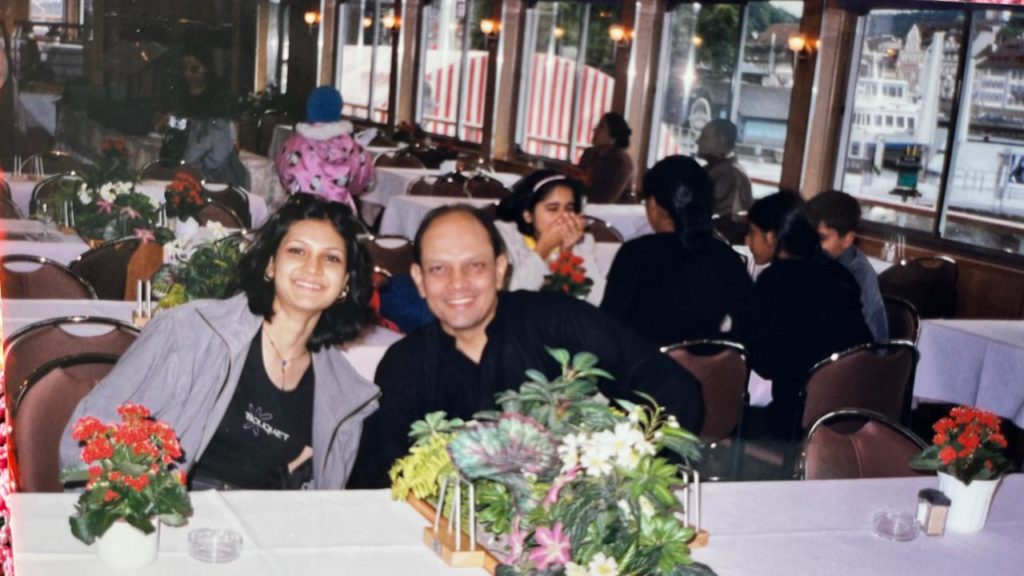
And so, in the months following, I got lessons from ‘Bacchu Bhai’, the man who used to drive my father to work and back. I barely recall a time when my dad didn’t have a chauffeur. He was always on the job in the back of the car, on calls, writing furiously in his large executive notepad. His hours were very long and he could be unreachable for extended periods. Bacchu Bhai could always be counted on to let my mother and us know as to where he was and when he was likely to come home. The word chauffeur, though, feels too stuffy to describe a man whose name literally translates to younger brother. That wasn’t his actual name, of course. It was just what we called him. It felt universal – like something everyone could use to address him – the adults and the children alike.
Bacchu Bhai was part of the family. He had watched us, my brother and me, grow up. He was part of the celebrations – my brother’s admission into the best business school in India, my admission into the best law school in India. He was also part of the admonitions – the shame-faced pick-ups from pubs when we were still too young to visit them and hadn’t quite worked out how to break the rules without the parents finding out. Bacchu Bhai had driven me to my wedding. And Bacchu Bhai taught me how to drive.
So when I came to you, dear Britain, I had both, a valid driver’s licence – albeit obtained thanks to my father’s connections – and, more than a decade’s practice of driving on Indian roads. Both countries were right-hand drive. The road to a driver’s licence in Britain had to be simple. Learn the new rules. Pass the two tests. Done. Easy, right?
Wrong.
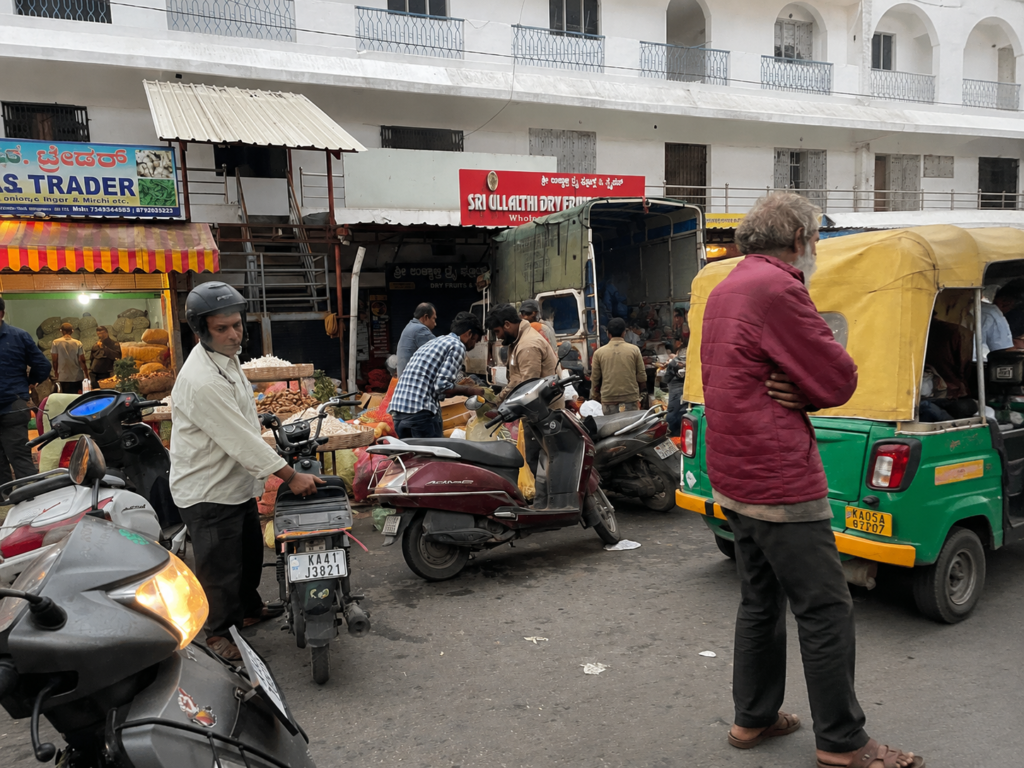
In reality, I had to unspool my life’s driving experience. Unlearn the rules. Undo all the habits. Like the fact that in India, lanes are mere suggestions mostly ignored. Traffic lights are optional. Honking is mandatory. Cows have right of way.
You can stop anywhere. Indicate. Or not. Entirely your discretion. You could also stick a hand out to wildly gesticulate your intention.
Road traffic is a heaving, headless and endless mass of cycles, scooters, autorickshaws, cars, buses, lorries, pedestrians, dogs, all close enough for it to turn into a melee, but somehow, miraculously not turning into one.
If you try to execute the ‘Mirror, Signal, Manoeuvre’, you are unlikely to be able to manoeuvre for hours.
And so, dear Britain, I had to write off my entire driving experience like a depreciated asset. Break old habits. Build new ones. At 37, none of that comes easy. My tragically comic driving lessons in Britain can probably best be described by my driving instructor who, on multiple occasions, was known to exclaim, “Purna! I will open this door and jump out of the car!”
But that, dear Britain, is a story for the next letter. Until then.
With love,
Purna